

Health Care App Research
Gain rich experience in multi-interactive user testing.
Discover the 5 levels of preferences for mobile App UI among elderly; cultural differences can also play the key rule in interface preferences.
Using participatory design and cultural-centered interfaces to explore the care needs.
Brief Summary
When the TA is mature people, it is suitable to use participatory design into user testing & interviews to jointly create the UXUI and functions that each other wants.
Research Question
This research aims to explore and establish a culture-adaptive design guideline for mHealth apps used by Taiwanese mid-aged informal caregivers.
Literature Review
mHealth Apps for Elders
Participatory design is an effective approach for engaging seniors to gain insights, and increase mHealth app's effectiveness and
Culturally Adapted User Interface
Users' cultural backgrounds should be taken into consideration when designing Ul. Marcus combines his definition of components with Hofstede's culture model to create culture-related design guidelines.
Methods
Step 1
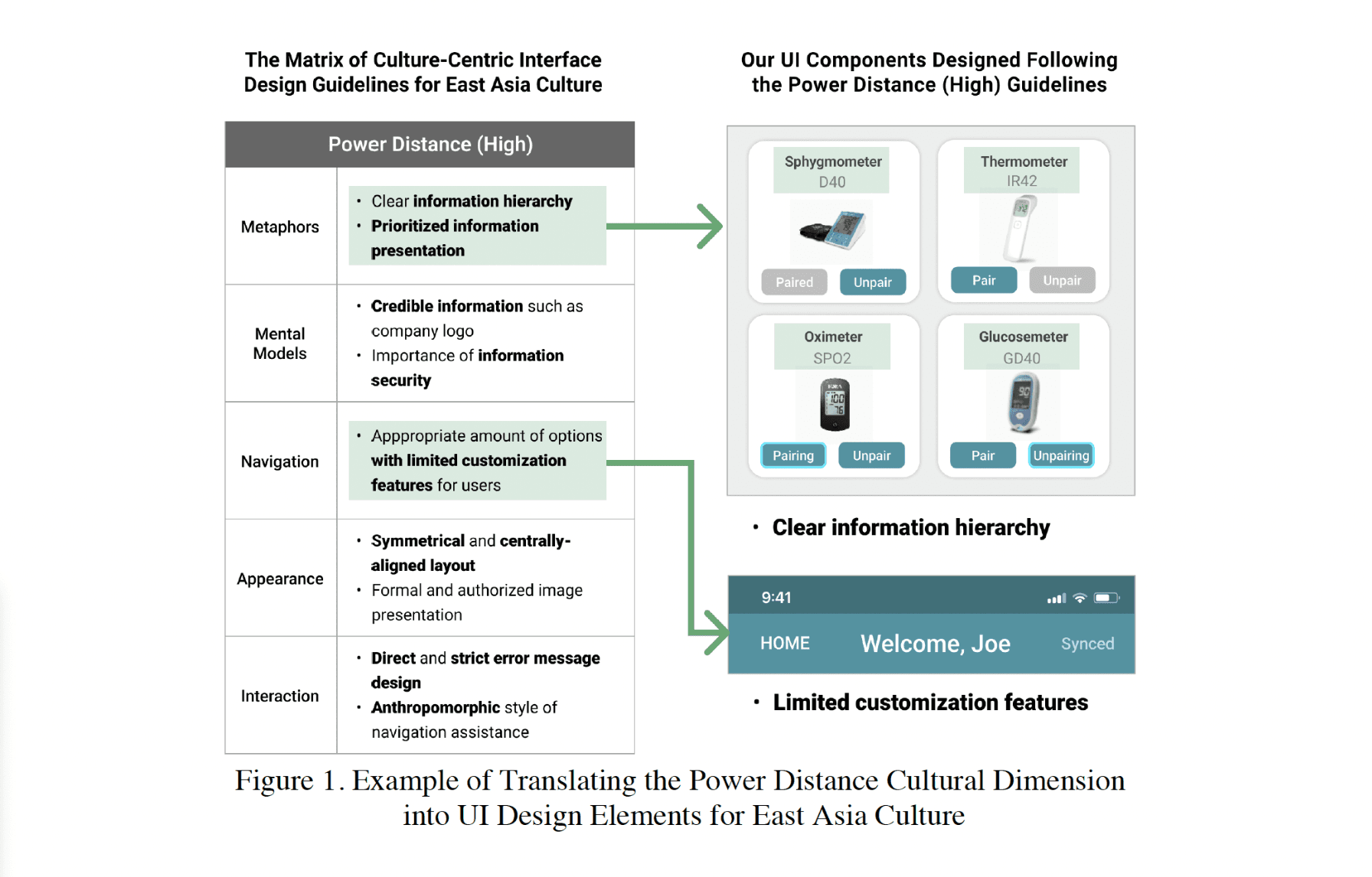
Informed by Marcus, we generated a design guideline matrix based on Taiwanese culture design principles for reference purposes during the redesign process.
Step 2.
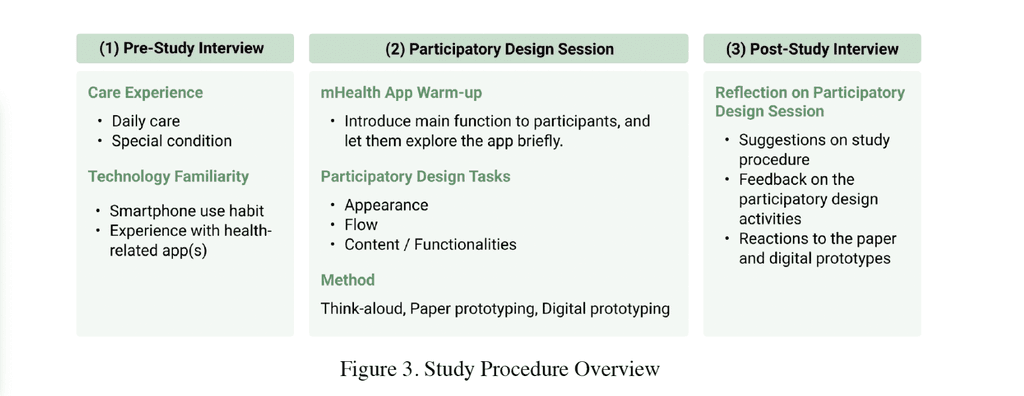
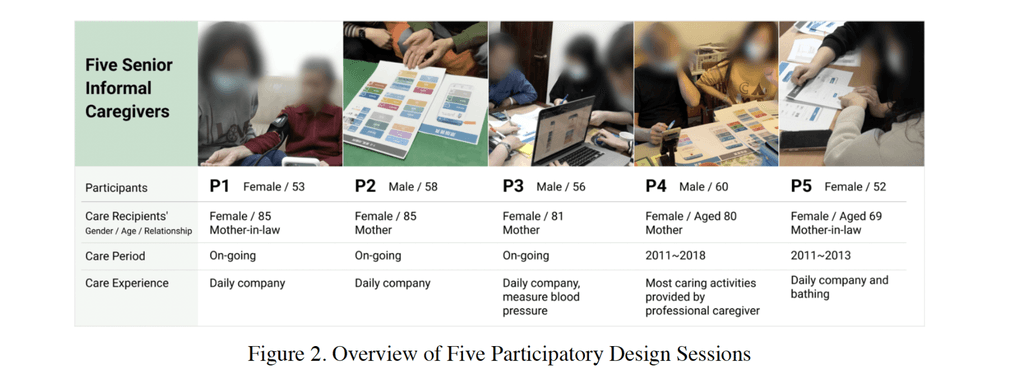
We then conducted participatory design sessions with five senior informal caregivers to collect their thoughts on the Ul design of the mHealth app and redesign the four main pages of the app.
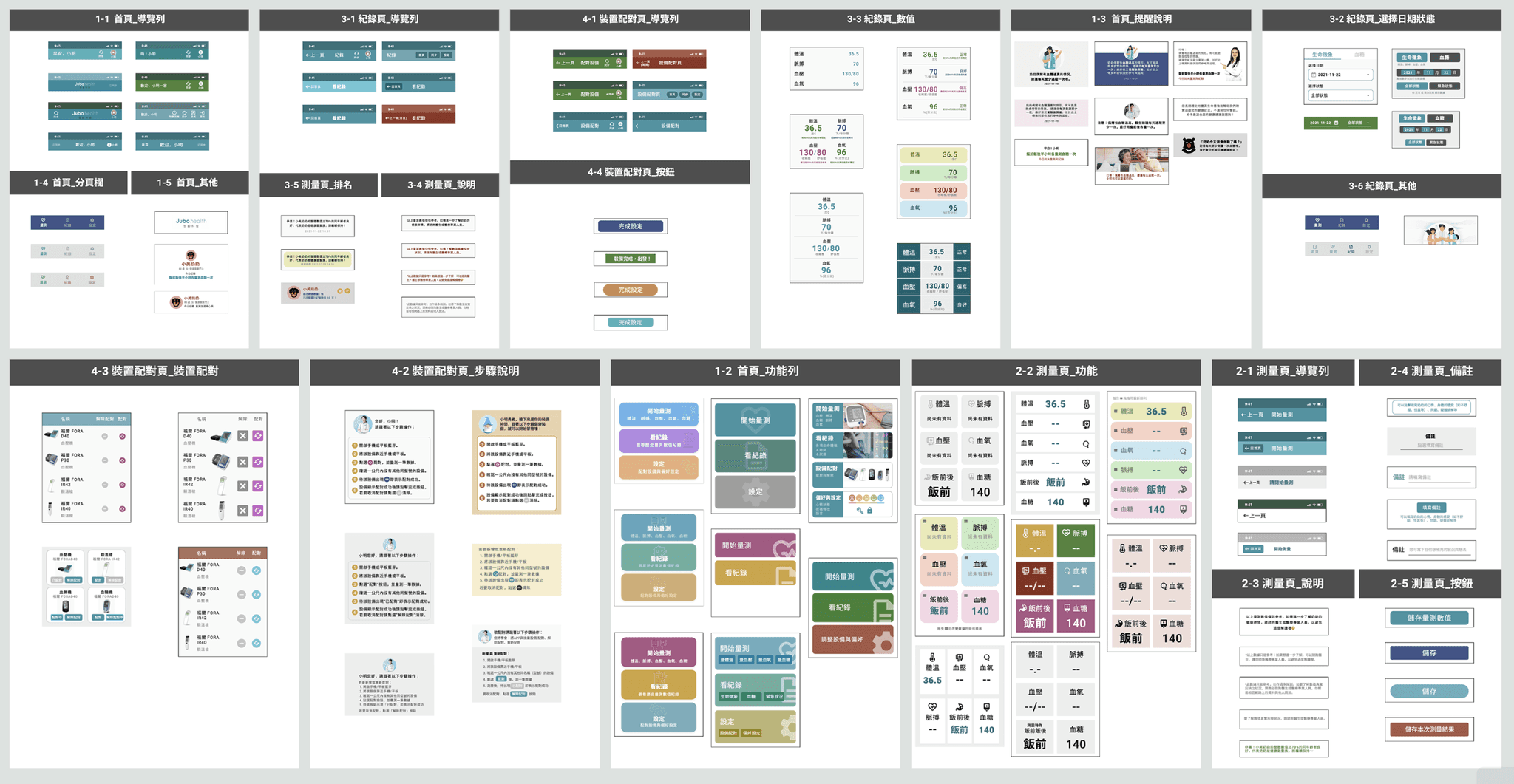
Culture-based UI components for Participatory design
Key components of the app are redesigned according to cultural adapted UI types, and as a reference or choice for the elderly during participatory design.
Learning in Participatory Design
Unlike the AB test, we won’t be stuck in "we have to choose 1 of the 2." and don’t have the context to know exactly why.
More styles are design for each component in advance (e.g. designed according to the cultural-centric UI design guideline), and given to the participants for reference.
With more choices, the participants can express more clearly why they like it, rather than using the ones that are based on simply compare or relatively liked.
Often the participants will be more willing to draw what they imagine after being exposed to multiple stimuli. Letting the design have more possibilities and the "why" behind them.
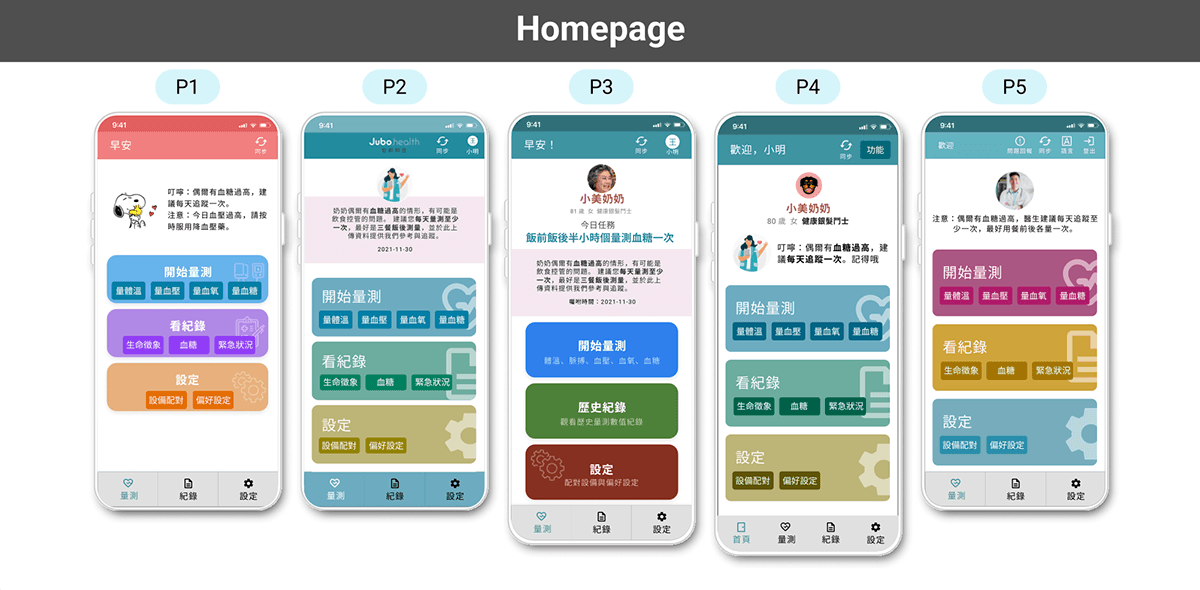
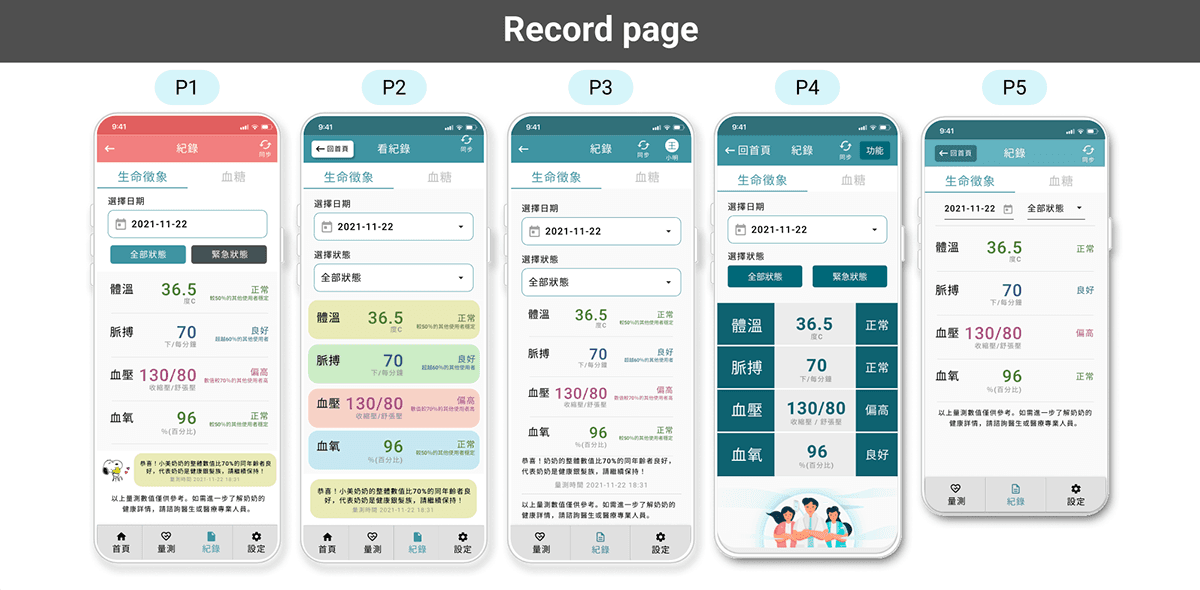
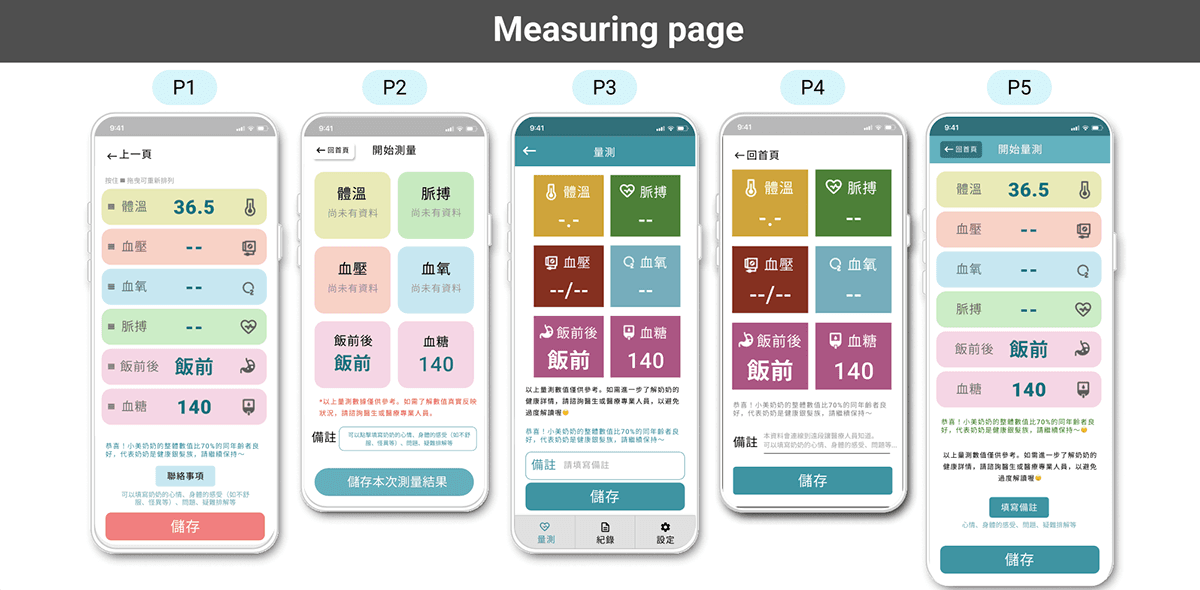
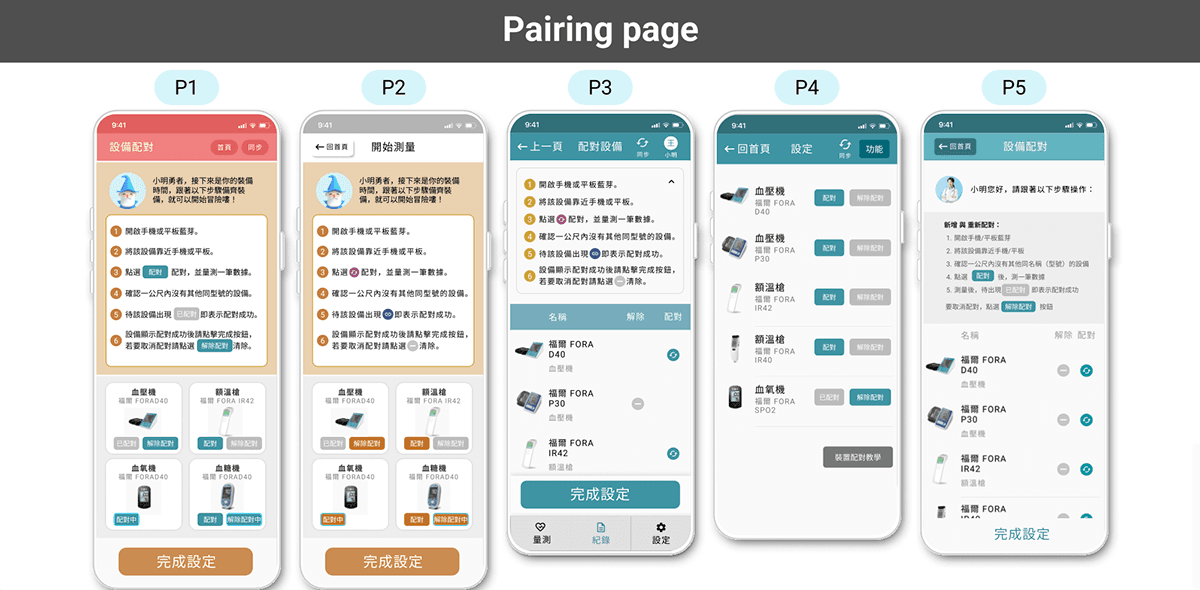
Learning from Cultural-centric UI & Participatory Design
Culture largely drives people’s preferences and behaviors subconsciously.
Understanding the user's culture preference can more effectively enhance the communication and understand the meaning behind the choices.
Participatory design is a great way to explore and engage with users in real, specific behaviors.
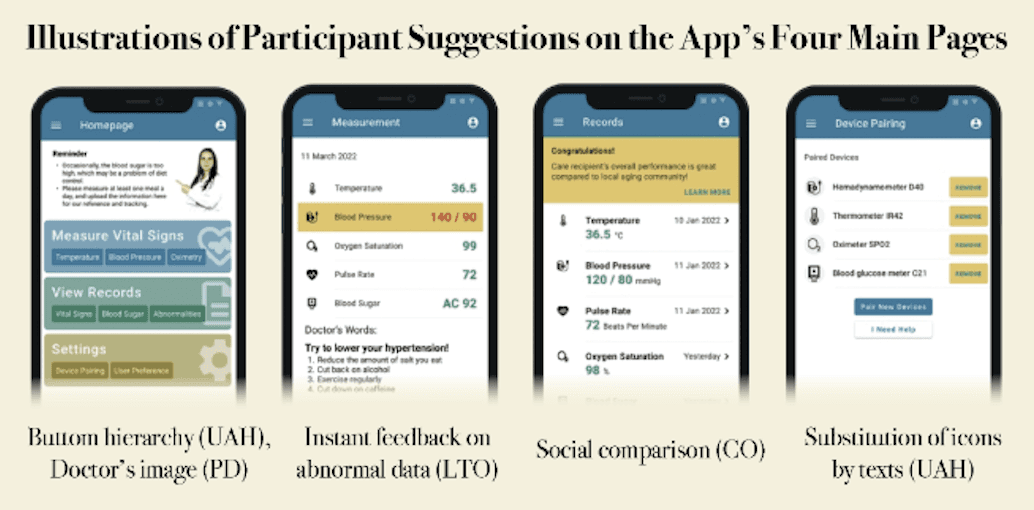
Design Implication- 5 dimension of vital Sign Data needs
Health status prediction and following advice.
Medical support with instant communication.
Gamification design like Avatar and social comparison.
Using color for clear and intuitive health status presentation.
Larger and clear information display.
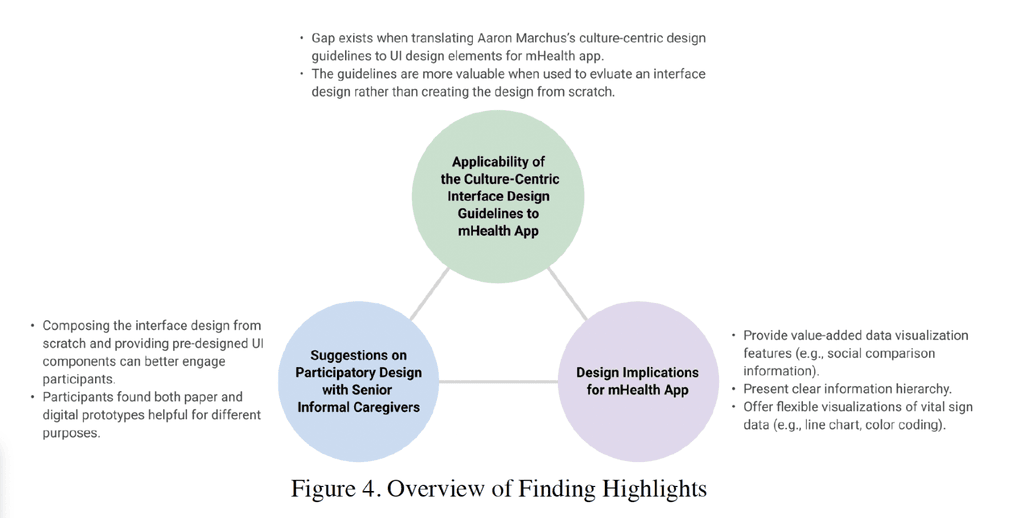
Finding Highlights
Design guidelines contradict one another sometimes. Challenges remain when translating Marcus's design guidelines to UI design for mHealth app.
Tendency prediction chart, social comparison information, and social support system are preferred features for vital sign data visualization.
Paper prototypes facilitated communication and interaction while digital ones provided more realistic representations of seniors' design decisions.
Providing an appropriate amount of pre-designed UI elements helped engage senior participants in the Ul component collage
Lesson learned
Lots of preparation and pilot test is necessary required.
Use the terms base on participants' ages and backgrounds.
Help participants recall the key statements they said.
Adjust the procedure according to the participants' reaction and situation.
Compose the design from the blank and provide UI components' sets can engage the participants more.
Assist the participants to imaging the interface can smooth the procedure.
Draw draft can make the communication content concrete.
Use digital tools to present the design results of the participants can help confirmation.
Conclusion
&
Our results indicated that there were some design traits participants shared in common that conform to Taiwanese culture design principles.
Iterating the design of mHealth app, and conducting co-design sessions with more samples are needed for future work.
Special thanks
To teammates: Wen-Lin Chiao, Ying-Jia Hong, Yu-Hsin Wang, PM Yu-Jou Chou.
To Jubo Tech. team: Wen-Lin Chen, Yi-Chun Tseng.
And most credit to prof. Pei-Yi Kuo