

HUNT- Campus Problem Solving Forum
Explore how we can actively participate in the campus community to empower us from the design perspective.
Map-Based Campus Forum / Service Design / UX research / UX design / UI design / Framer / Webapp
*Won the 108th IEEM Graduation Project outstanding paper Award
– with Participatory GIS and Experience Sampling Method

Our value proposition
A student will go into the field, discover and discuss campus problems, and create possible solutions together."
Role
Mainly responsible for UXUI design in the graduation project composed of 4 people, and worked together to complete the thesis research and rethink the UI design method on the new platform (map base).
*Special thanks to teammates: Takahito (PM & lead research ), Skyle (Engineer) and Huang-Qing (Data research), and prof. Yuan-Chi Tseng
Brief
Challenge
We care about the campus, but important information is difficult to verify and practical information is rarely known.
The "secrets" in NTHU may not be discovered even if we deliberately to search.
We share "secrets", but real-time information spreading is limited and location cannot be described precisely.
Solution
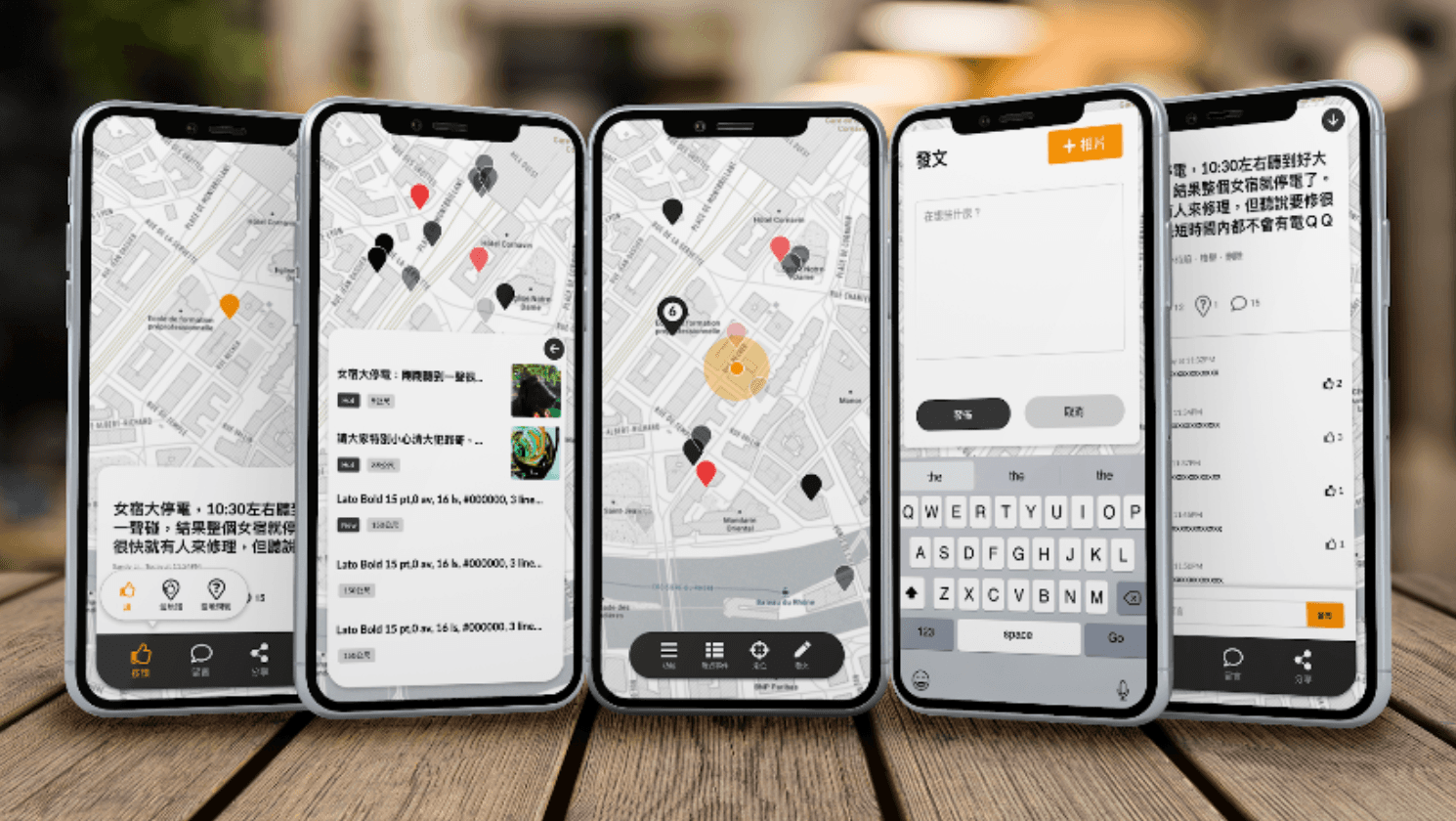
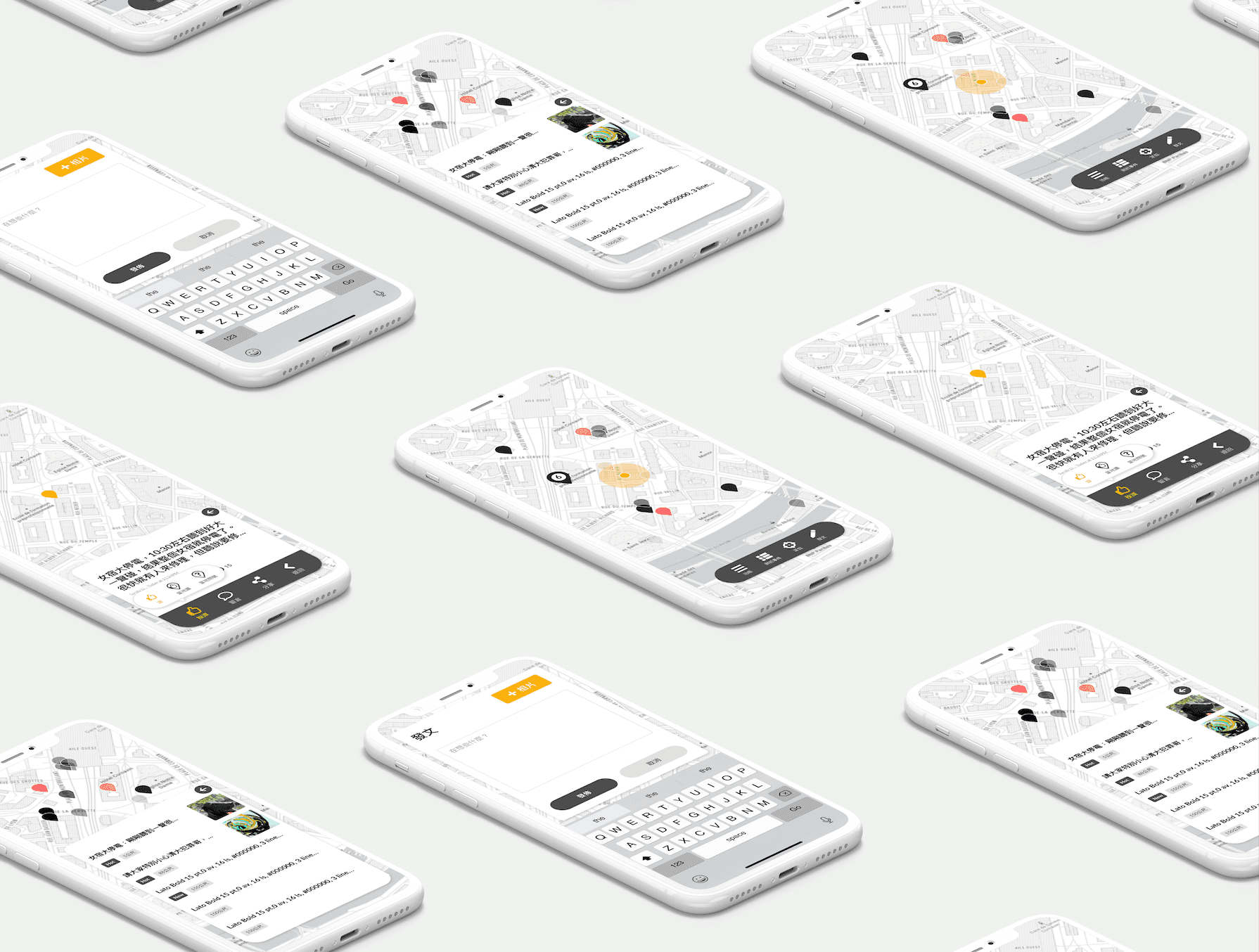
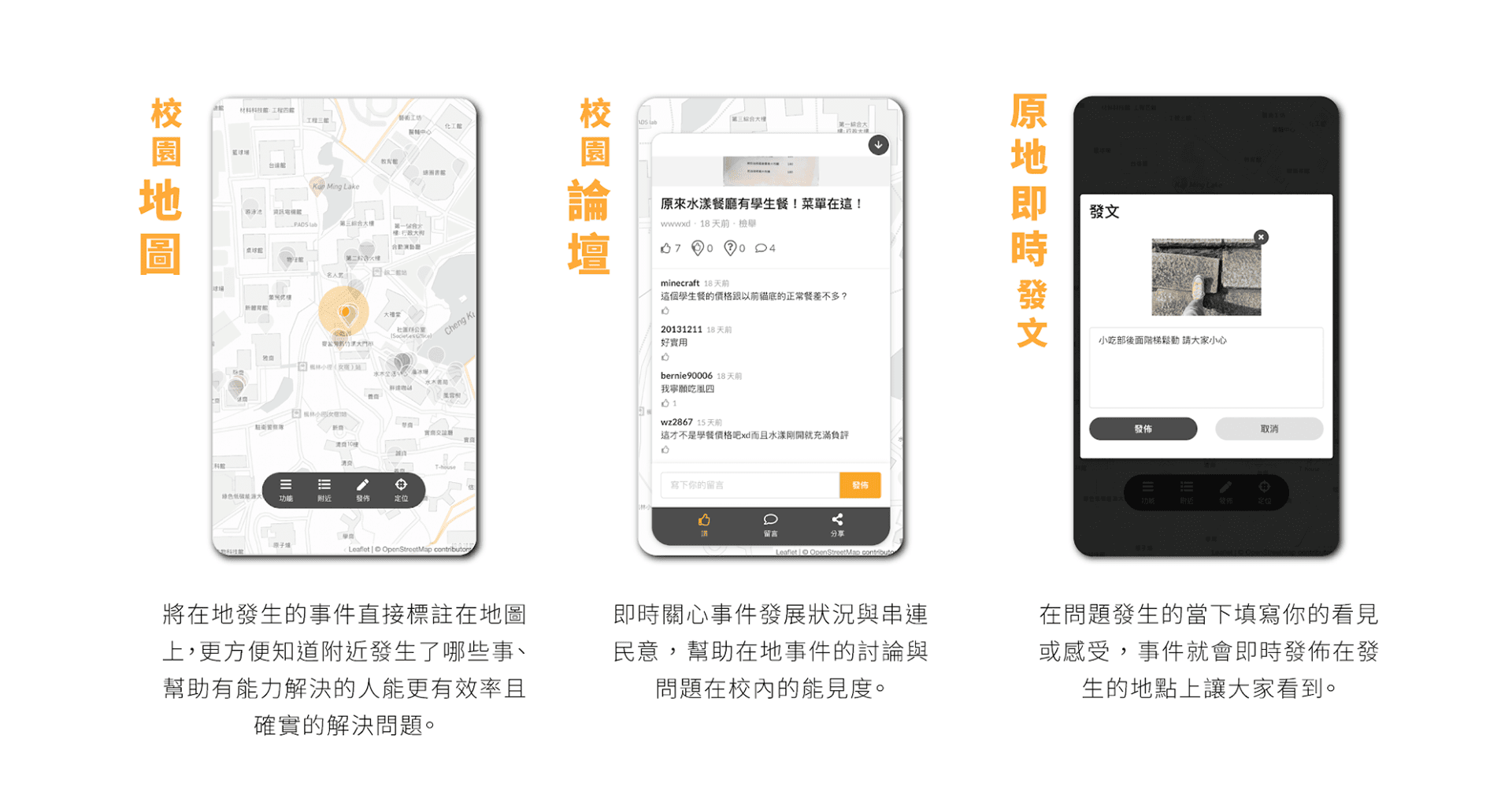
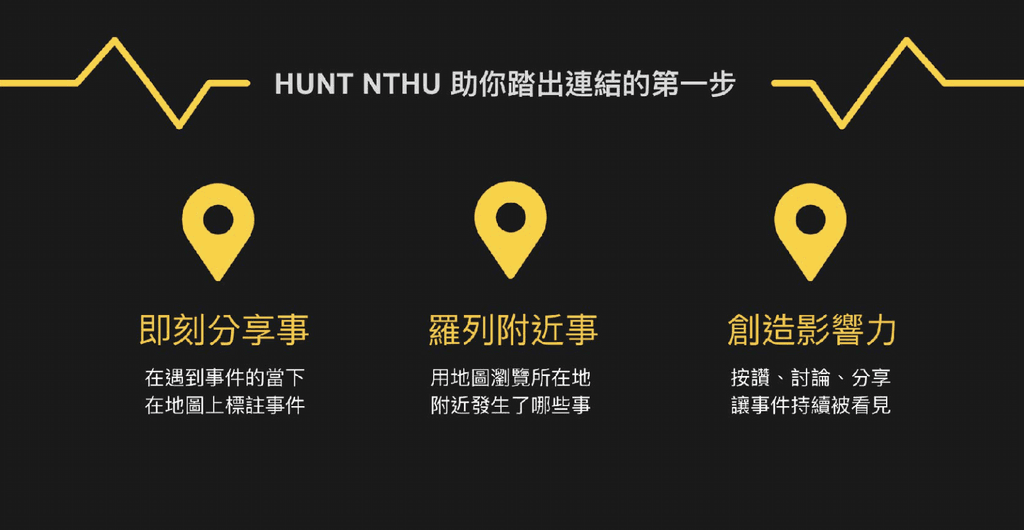
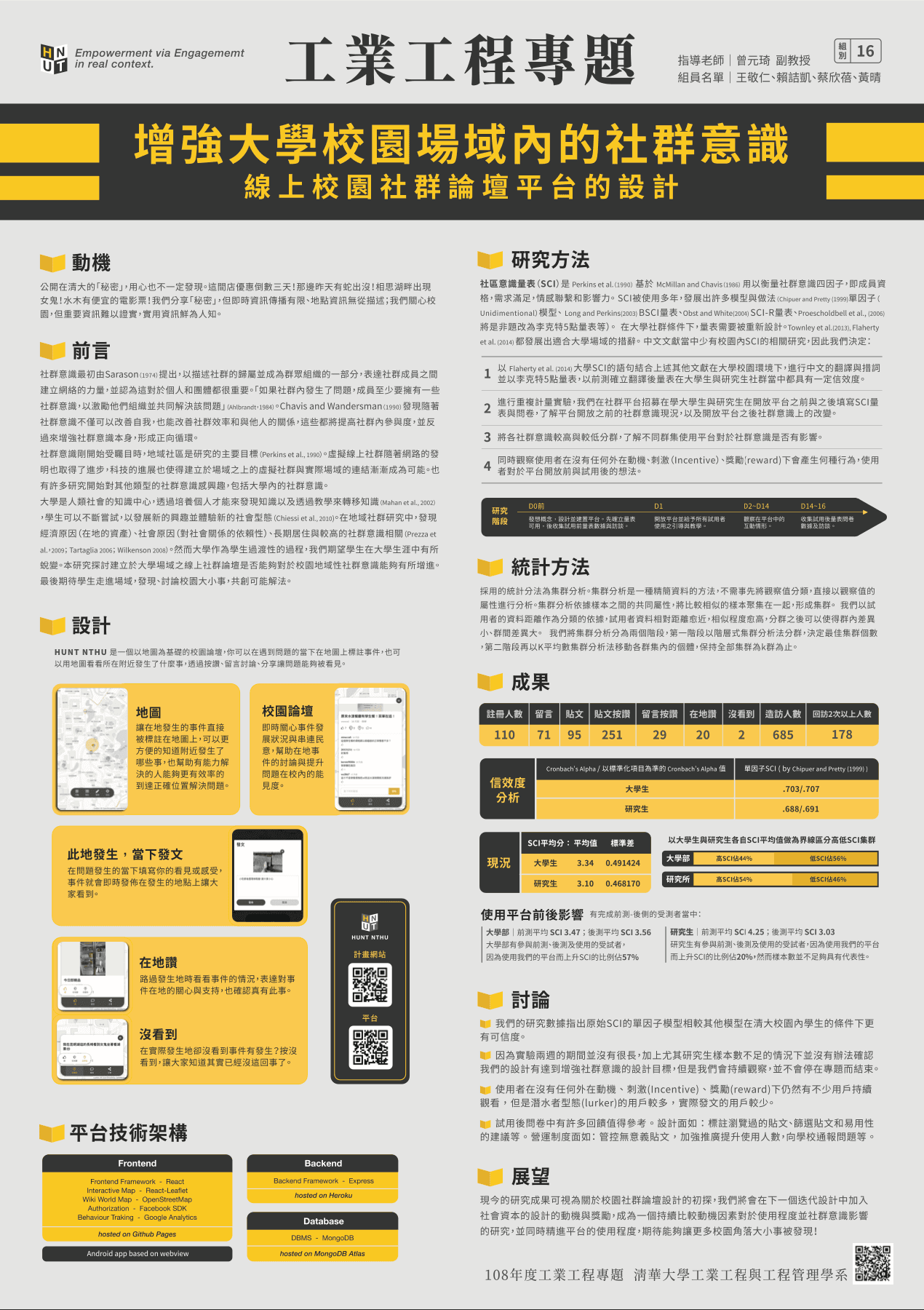
HUNT NTHU provides a platform to show the information about events, problems and location on campus, this campus forum based on map.
User can mark the event on the map when you encounter a problem,
or can use the map to see what is happening nearby.
Make the issue more visible through likes, comments, and sharing. It aims to make everyone care more about their surroundings and make the campus a better place.
HUNT NTHU
A GIS-based participation online forum. All question postings are built on a map and the location is directly displayed, which not only allows the user to grasp the information faster, but also presents them in the format that more directly and realistically than Mainstream social media ones ( waterfall & itemized ).
Problem identify
Important information in the campus is difficult to verify and practical information is apparently unknown.
Students often raise issues and opinions in campus on online platforms (FB, IG, etc.), but most of them have insufficient influence, low visibility of problems, and even attempts to solve them.
Campus authorities are willing to see students’ opinions, but due to the scattered and non-immediate of information, the usage rate of the official platform is also very low.
It's difficult for the student union to organize information and discuss with the collage units. This problem has existed for a long time. It is not easy to find a satisfactory solution.
The mentioned behaviors mainly occur in the FB community "Cow-Bei NTHU". Following are several core issues that we believe cannot be solved:
No responsible
Students posting a lot just to vent anger, but there is usually no action.
Information clutter
People cares about different things.
Irrational than rational
Most discussions are irrational, sarcastic, and ridiculing
Unable to trace
There‘s hard to know whether the problem has been/is being solved
communication gap
Social media can easily deepen misunderstandings between students and university administration
Repetition and confusion
The same question posted in different systems becomes an independent event, let the discussion often starts again.
Result
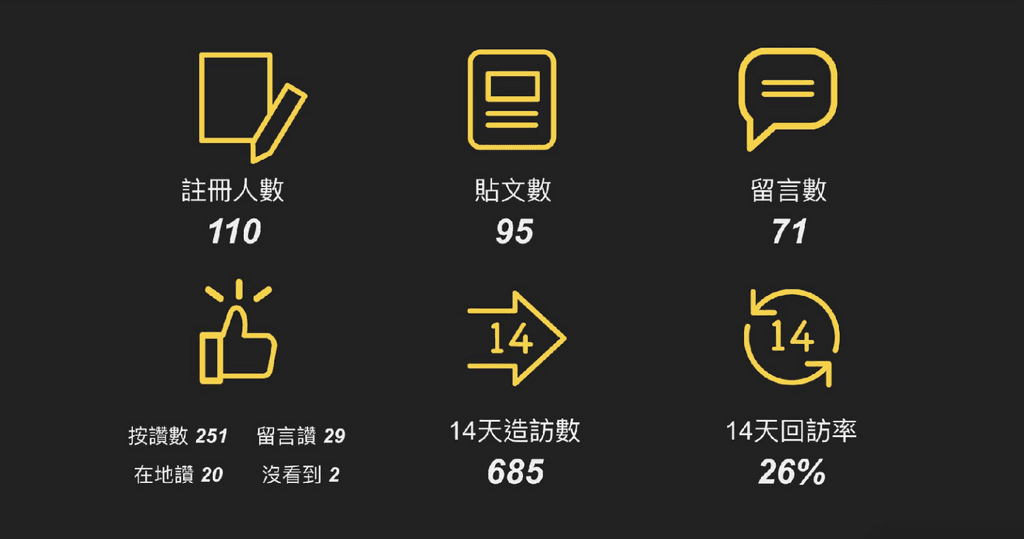
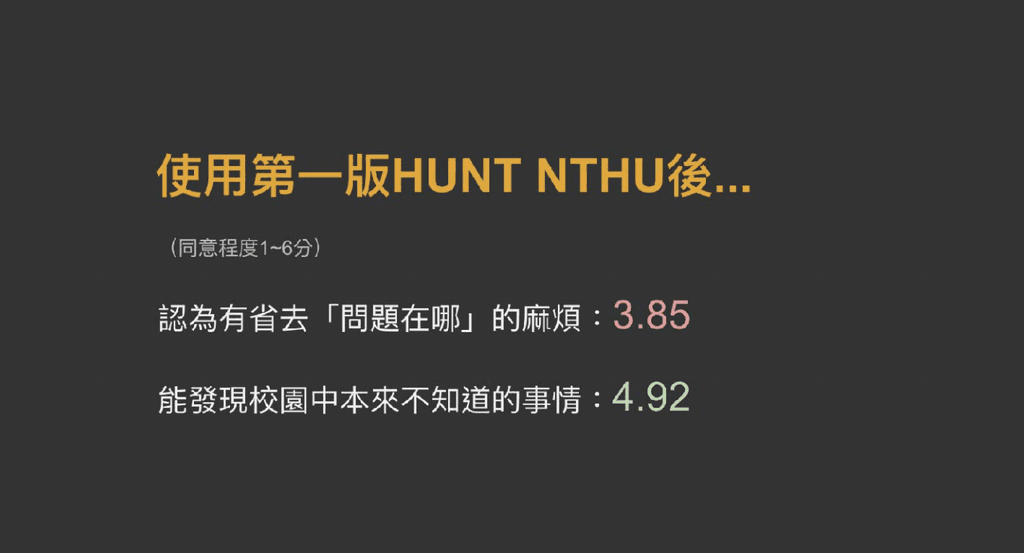
After 14 days of actual launch, although the level of participation was as expected, many problems were still found.
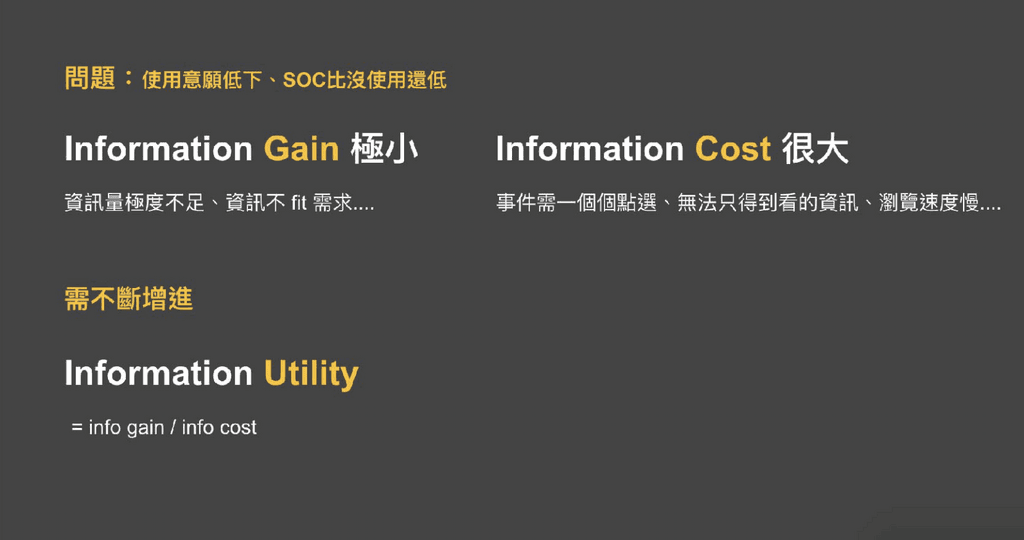
Iteration of UXUI are important, but many issues are still most fundamental, such as how to significantly increase the number of users and the amount of information
It cannot be the mainstream social media like FB, and how to differentiate it so that students really want to use it is the main difficulty.
Iteration
Launch quickly, collect feedback eagerly, iterate agian, and verify the importance of each design and function.
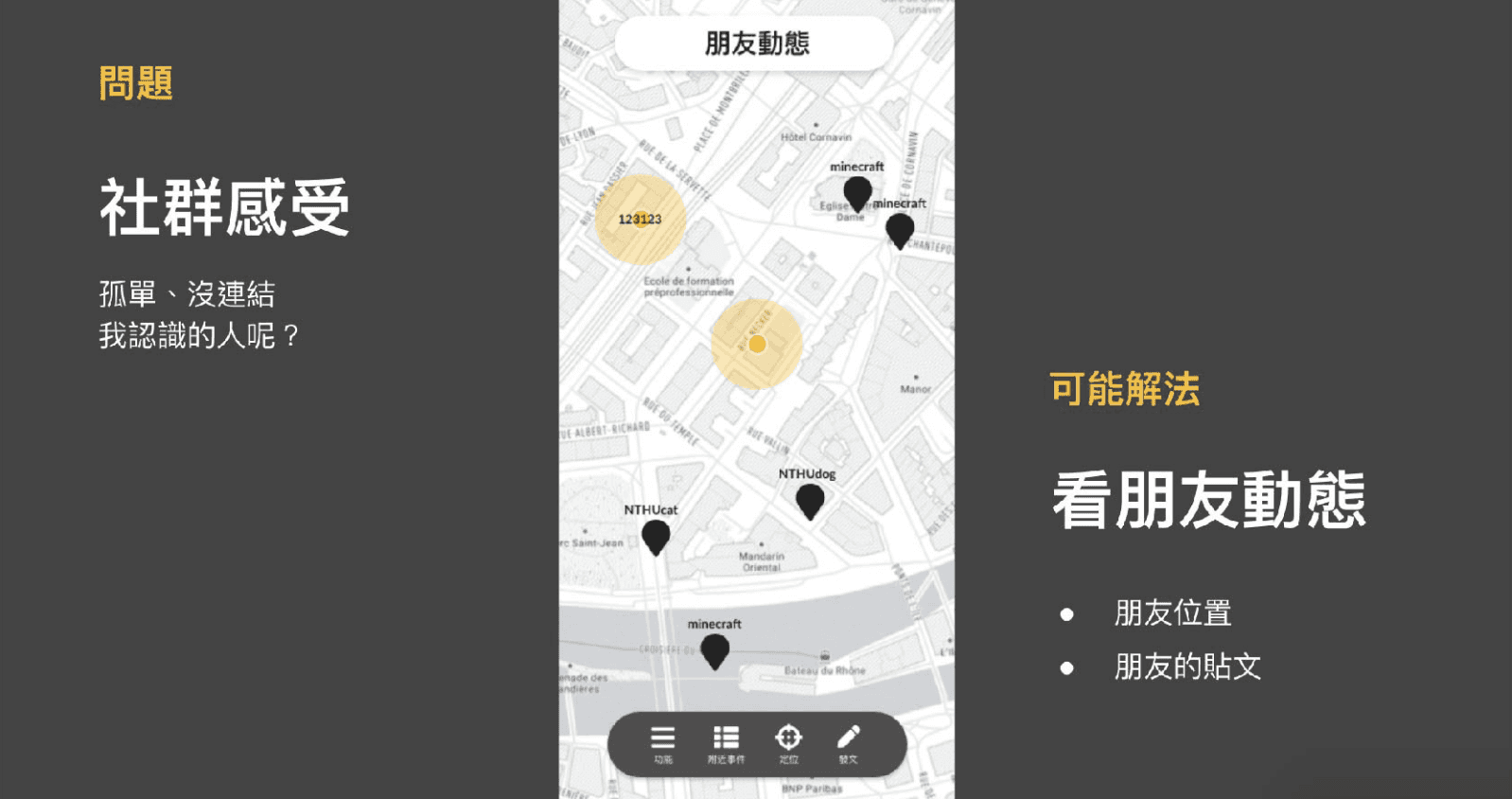
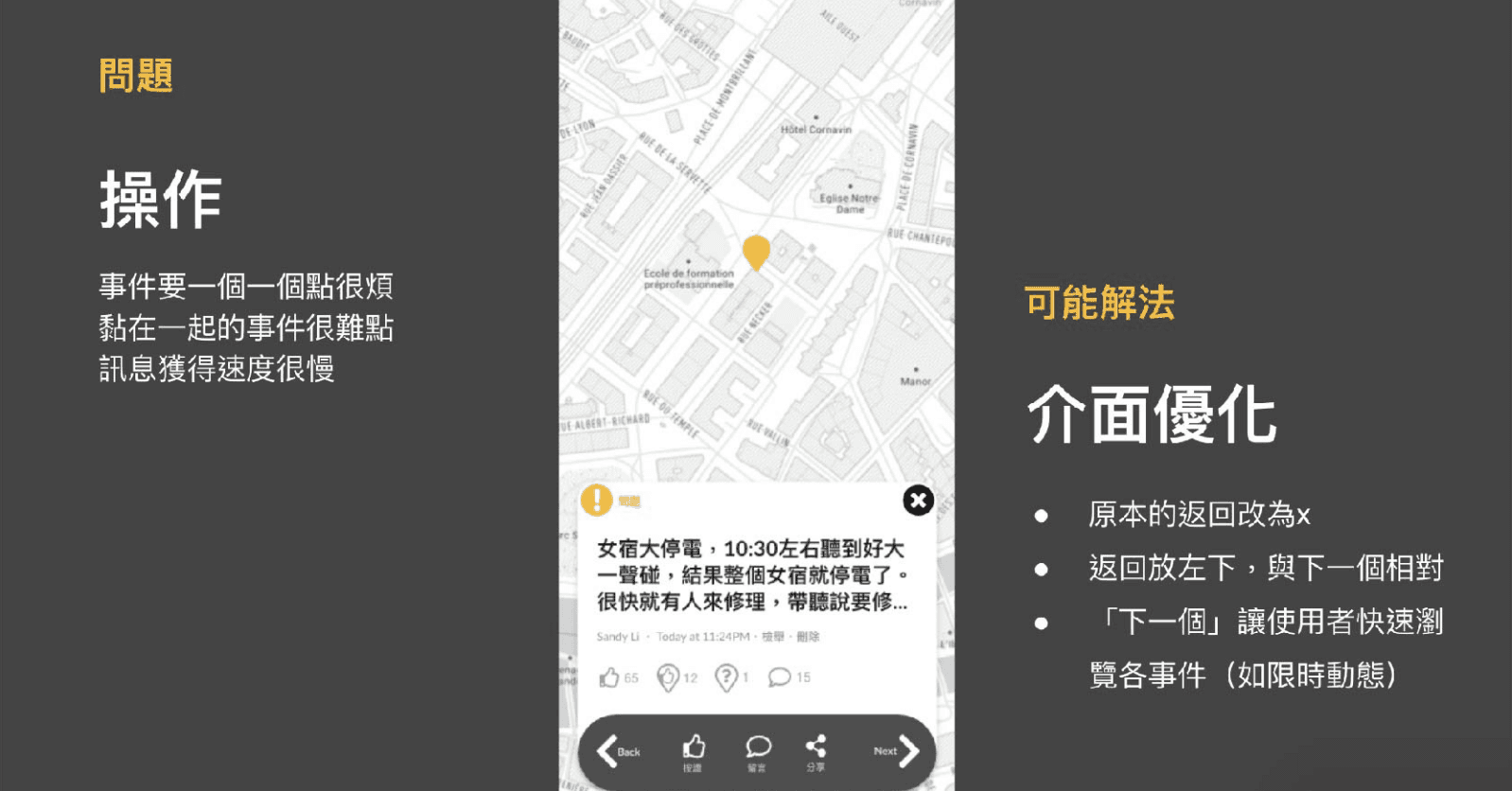
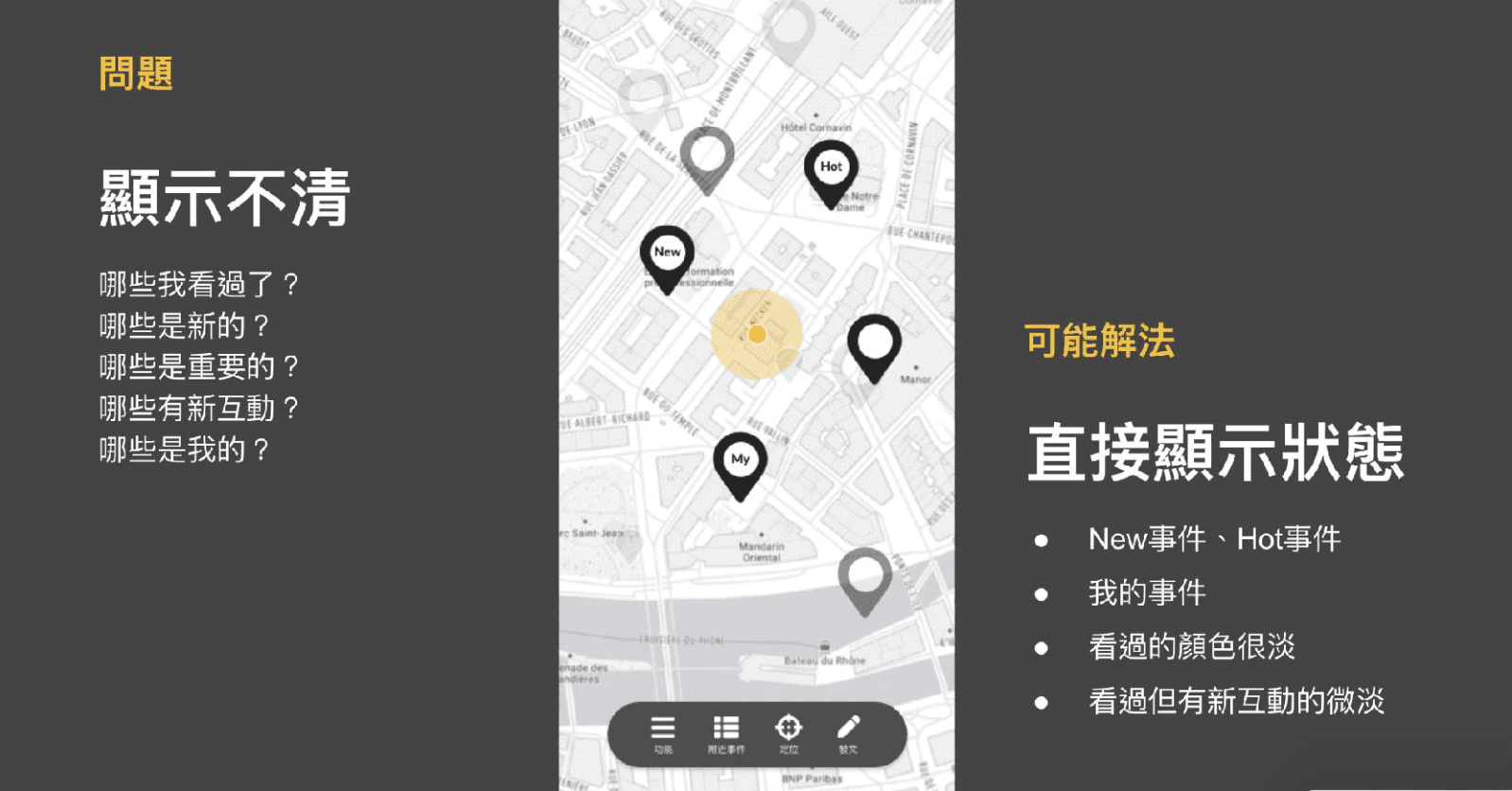
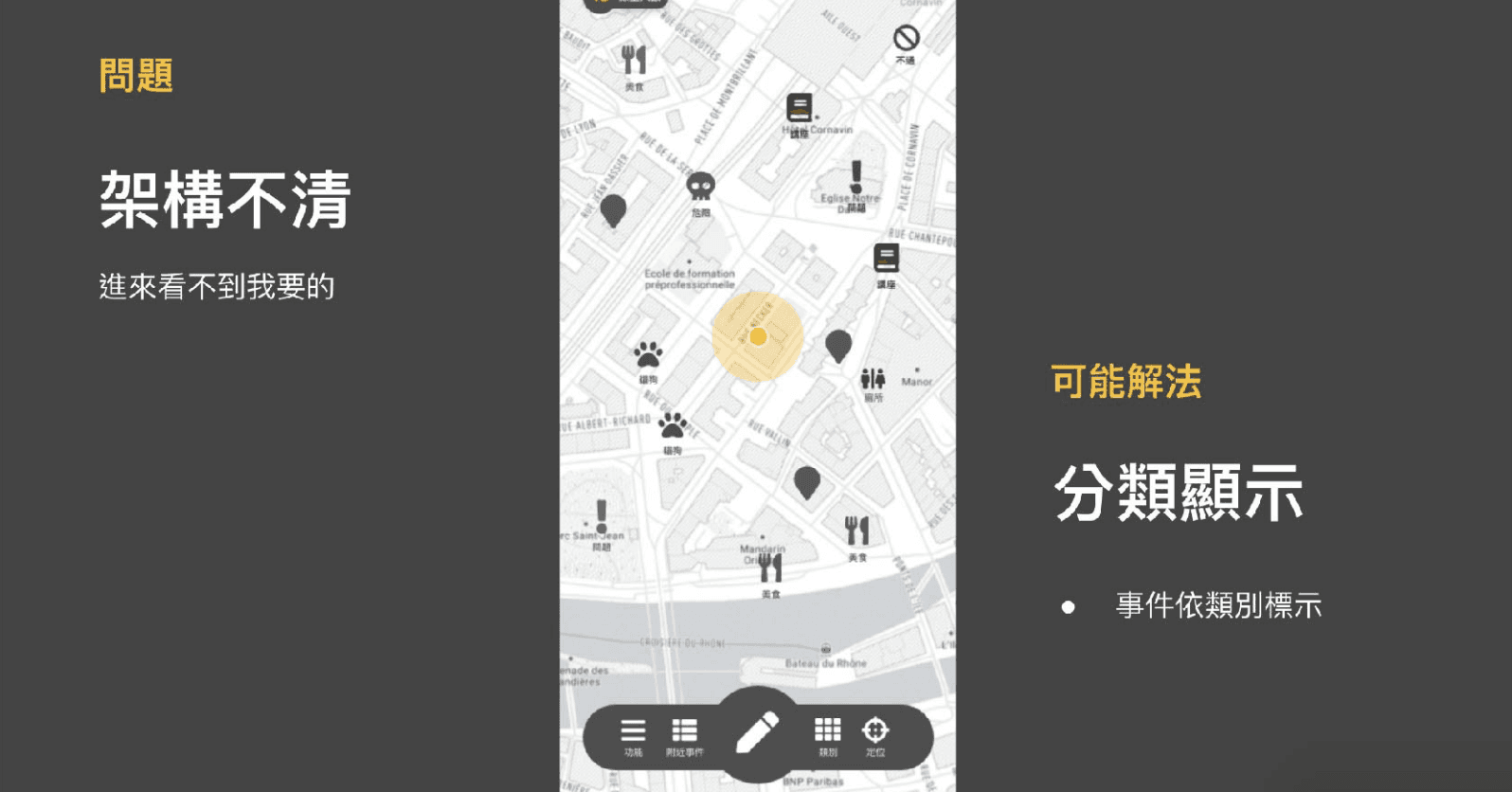
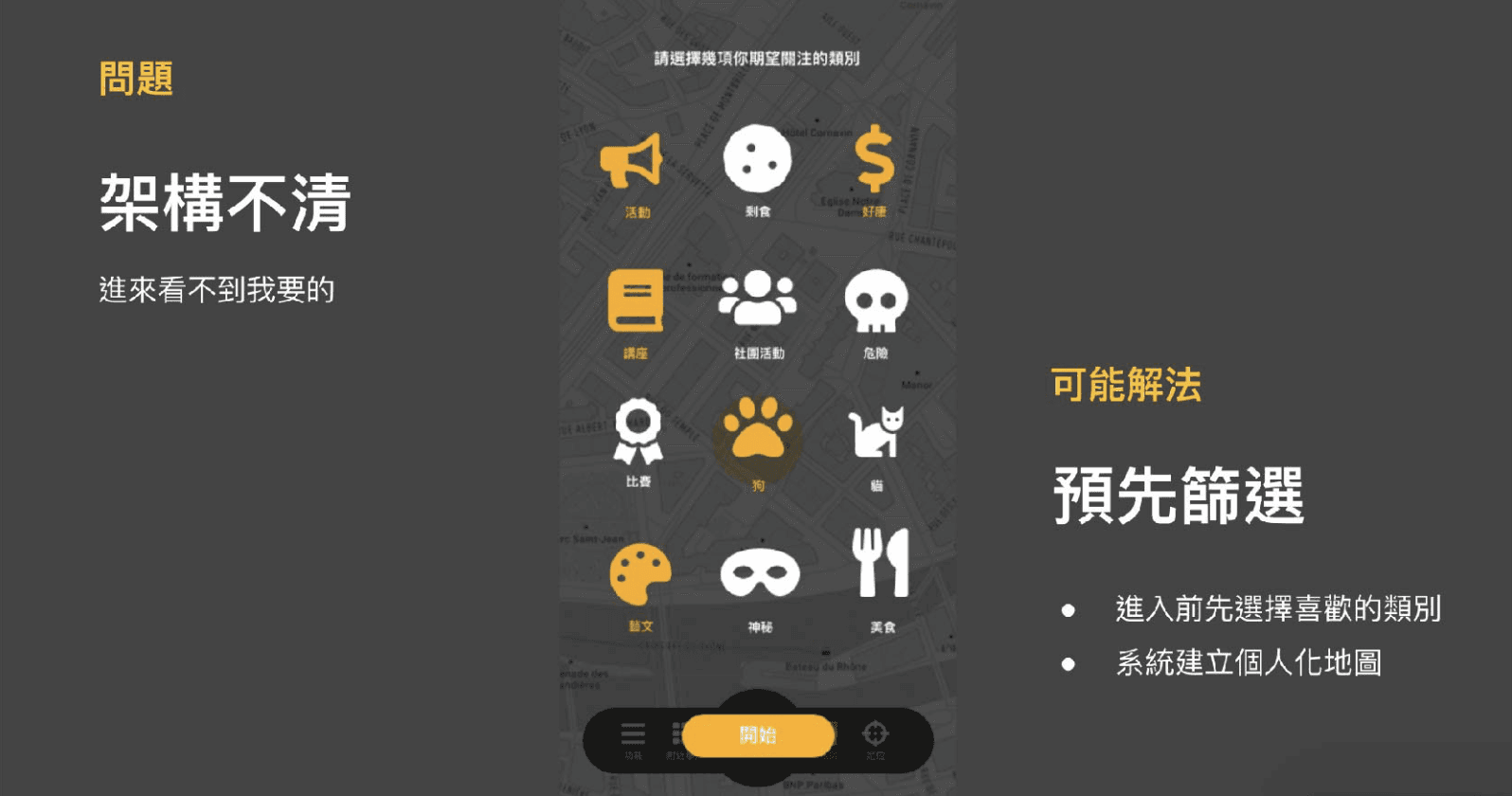
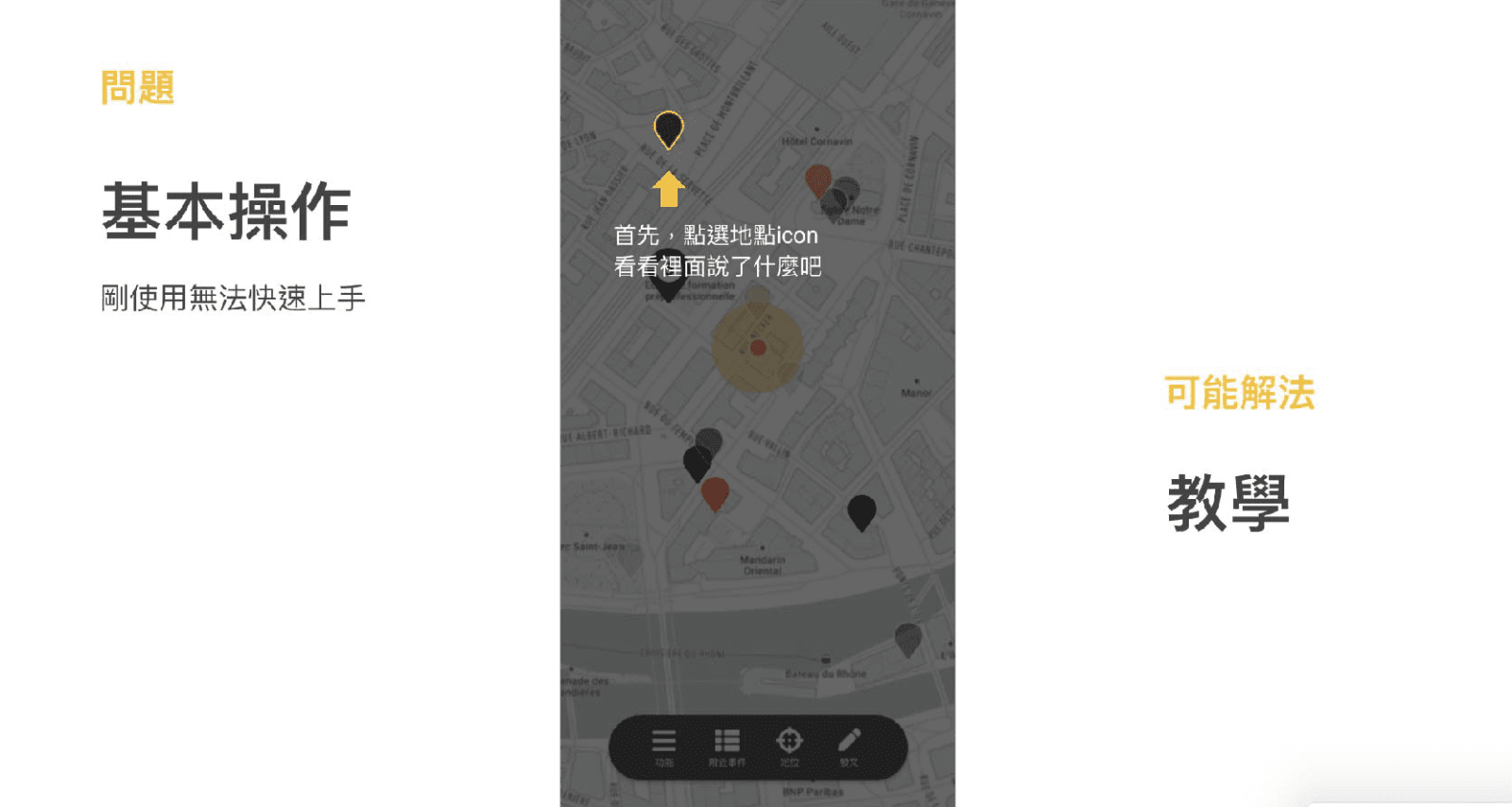
iterate based on the problems and feedback observed and collected in the first version test, to improve and add new services. E.g. following:
User segmentation
To enhance community cohesion- let the system to ensure that users are peers on campus by registering and logging in with university account.
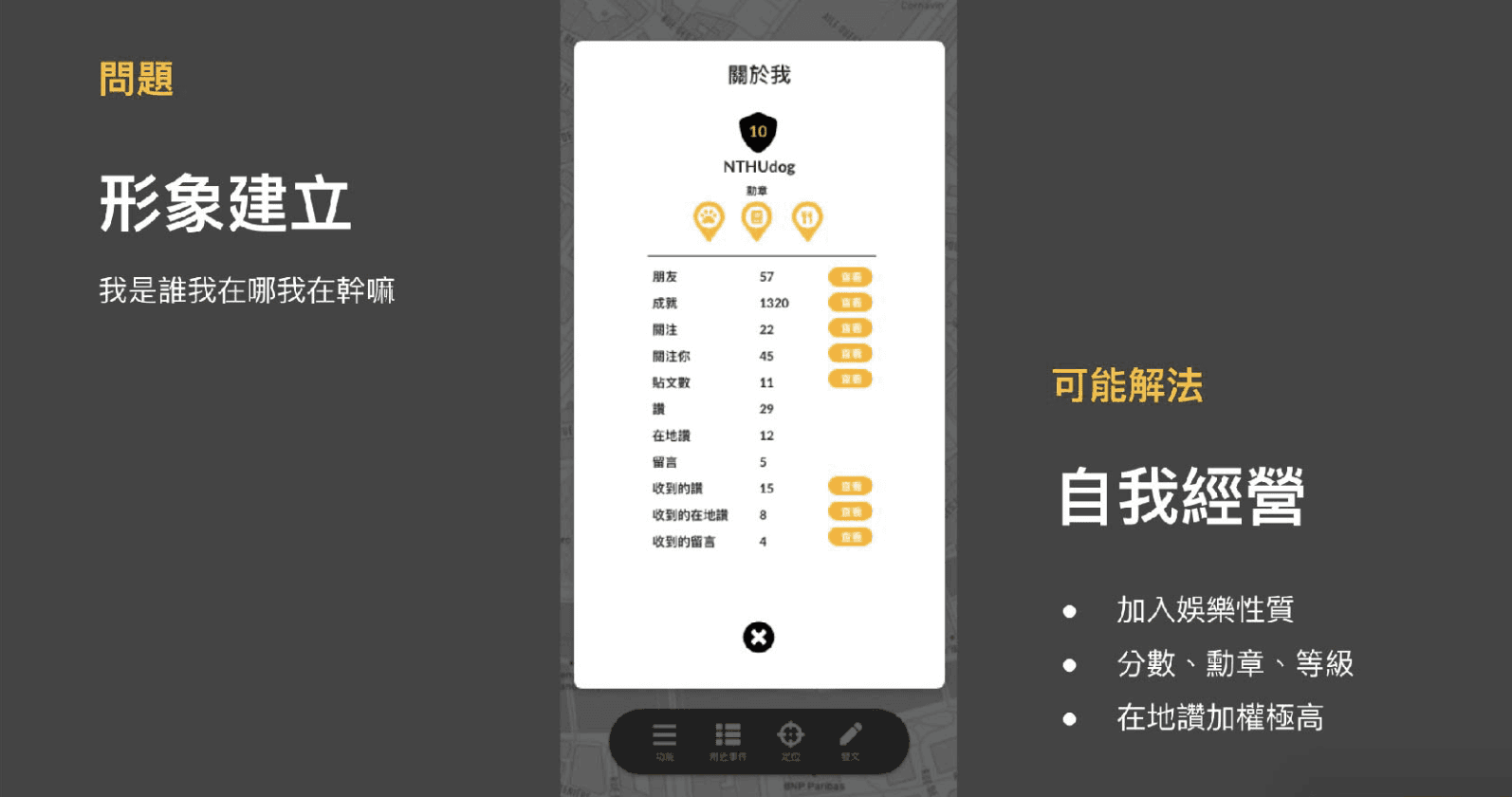
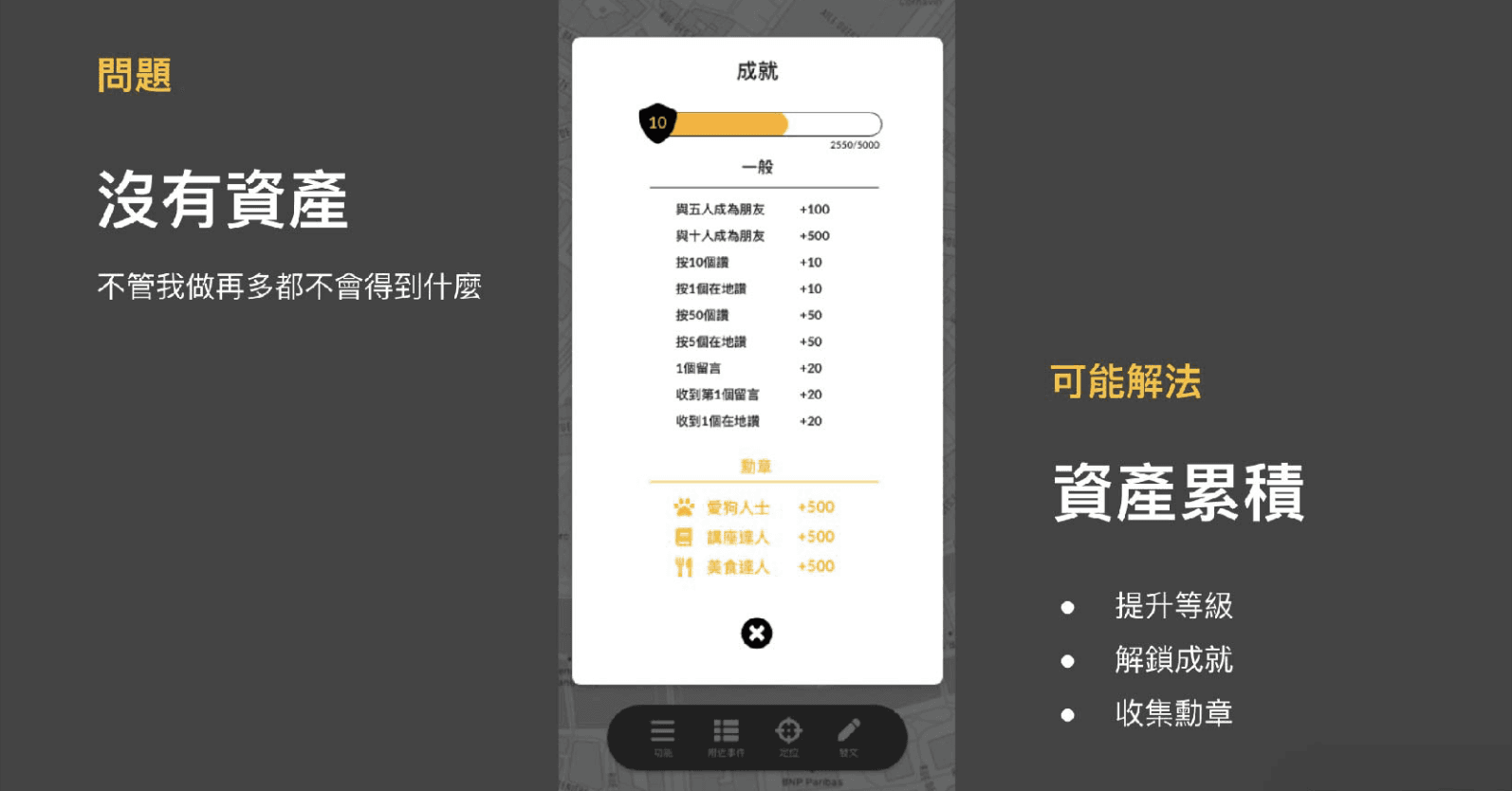
Increase entertainment and stickiness
Refer to gamification and map-based Apps such as Pokémon and Fortune City.
E.g. virtual treasures scattered within a given range can be collected (collection, points, rankings, rewards).
Future
Through prototypes and continuous interviews & research with stakeholders, we can repeatedly verify and enhance peer's imagination and experience of this community platform.
Design Challenge
Map-based platform might be unfamiliar for user. How to use design to guide users to "see what they want to see", "discover what they have not seen", "quick post", and how to make the registration process convenient and fast as possible (especially need to open the location services of mobile).
Before deciding on the interface style, I referred to several map-based APP UIs and found that since the focus is information, the screen should minimize decorations and distractions. Therefore, the design philosophy is keep components, icons and color theme as simple as possible.
We use Open Map Tiles and React, which can customize map elements, and to keep the system and style consistent. I worked closely with the programmer to quickly produce the first version of the WebApp for value verification and to reduce the time cost.
Innovative feature
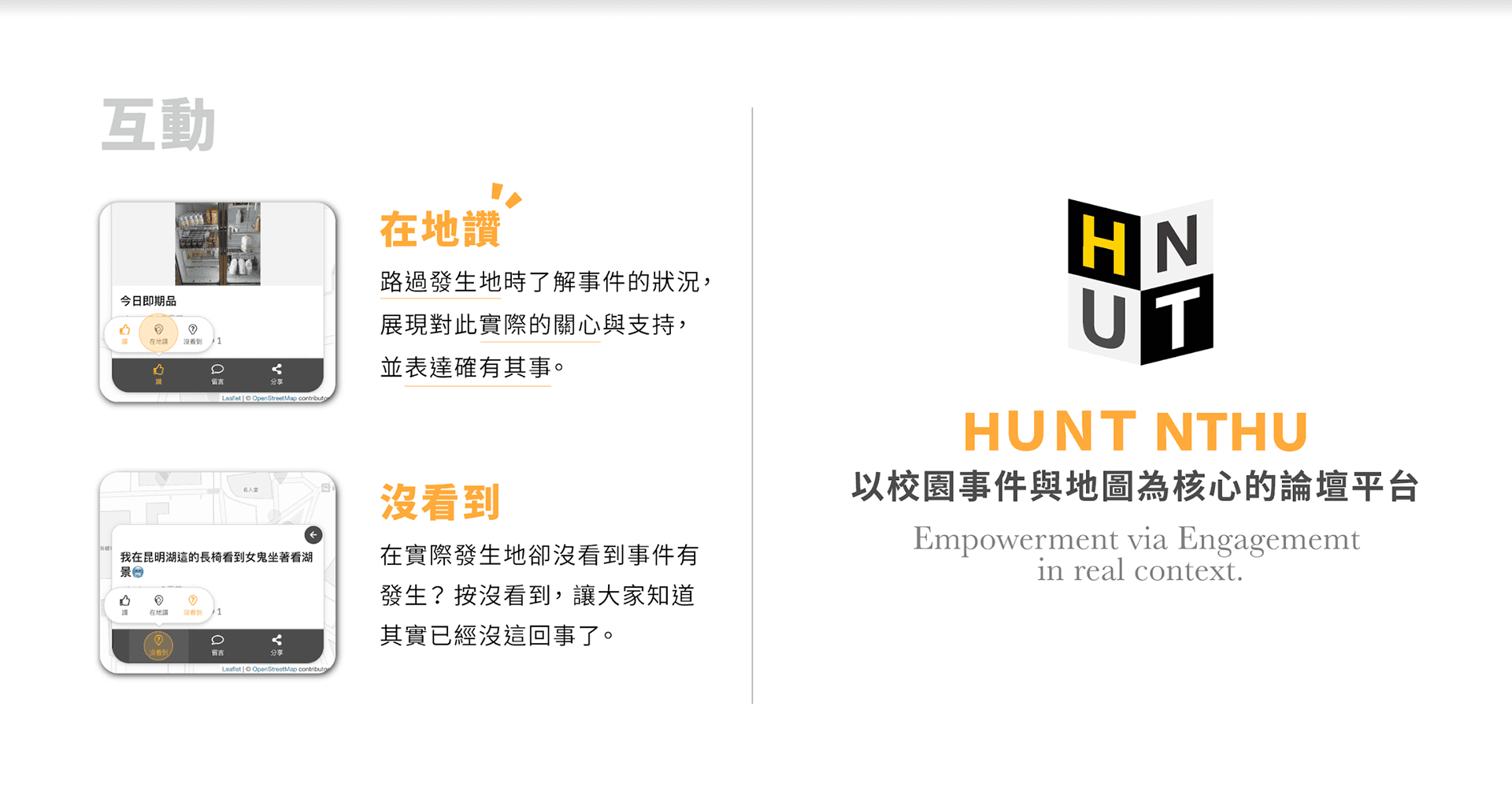
The newly designed "real-place Like" function is no longer mixed with the lifeless "Like". Instead, the user must actually be near the area of the post, indicating that the user has read what the post is about and it has actually happened, making community participation more real, direct and meaningful.
Learning
Learn how to balance the UI simplicity with the integrity of information
Clearly divide user flows from the beginning to reduce the risk of the user getting lost or giving up.
When creating map-base services, should focus to the information presented range, it needs to be more flexible and able to be adjusted freely.
本計畫為國立清華大學服務科學研究所曾元琦教授之科技部計畫 - 設計公民參與促進平台:服務系統設計、建置與營運
與工業工程與工程管理學系大學部專題學生王敬仁、黃晴、蔡欣蓓、賴詰凱之研究:
《增強大學校園場域內的社群意識:透過以自發性地理資訊為基礎的線上眾智論壇平台設計》之實驗的一部分,
是為了解在校園地區不同角色中人們的社群意識;
以及透過自發性地理資訊為基礎的線上眾智論壇平台的使用對於個體與社群層面之地域性社群意識的影響。